Introduction
Esports—short for electronic sports—has grown from a niche hobby into a global entertainment powerhouse. What once started as small local gaming competitions has evolved into a billion-dollar industry with professional teams, celebrity players, and millions of fans around the world. The transformation is nothing short of remarkable.
In this post, we’ll explore how esports became what it is today, the cultural and technological shifts that fueled its rise, its professional ecosystem, the role of streaming, and what the future might hold for this digital phenomenon.
The Early Days: When Gaming Was Just Fun
In the 1970s and 1980s, video games were still finding their place in the world. Titles like Space Invaders, Pac-Man, and Donkey Kong drew crowds in arcades, but no one was thinking about professional gaming yet. The first official video game competition was held in 1972 at Stanford University, where students played Spacewar! for bragging rights and a Rolling Stone magazine subscription.
The 1980s saw the first taste of gaming fame when Twin Galaxies began keeping official high-score records. Players like Billy Mitchell, known for his Pac-Man and Donkey Kong achievements, became minor celebrities. Gaming magazines covered their feats, hinting that competitive gaming had a future beyond casual play.
The 1990s: The Birth of Organized Competitive Gaming
The 1990s brought the foundation for modern esports. Home consoles like the Super Nintendo and Sega Genesis made gaming more accessible, while PC gaming started to flourish. Local tournaments began to appear, often sponsored by gaming companies looking to promote new titles.
Then came the internet, which changed everything. Games like Doom (1993) and Quake (1996) allowed players to connect and compete from different locations. The 1997 Red Annihilation tournament for Quake is often considered one of the first true esports events. The winner, Dennis “Thresh” Fong, famously took home a Ferrari as the prize.
By the late 1990s, StarCraft had taken South Korea by storm. Internet cafes (known as PC bangs) became hubs of competition. The country’s focus on technology and its strong broadband infrastructure turned it into a breeding ground for professional gaming culture. What was happening in Korea would soon inspire the world.
The 2000s: Esports Goes Global
The early 2000s marked the era when esports began to organize itself on a global scale. Professional leagues, sponsorships, and cash prizes started to appear. Titles like Counter-Strike, Warcraft III, and Halo established thriving competitive scenes.
In South Korea, StarCraft: Brood War became a national obsession. Pro players such as Lim “BoxeR” Yo-Hwan were treated like rock stars. Dedicated TV channels broadcasted live matches, and fans filled stadiums to watch their favorite teams compete. This was the first glimpse of what esports could become: a blend of entertainment, competition, and culture.
Meanwhile, Western countries started to catch on. Events like the Cyberathlete Professional League (CPL), World Cyber Games (WCG), and Major League Gaming (MLG) gave players opportunities to compete internationally. Prize pools grew, sponsors came in, and for the first time, gamers could make a living playing competitively.
The Role of Technology and the Internet
No other factor shaped esports more than technology. High-speed internet, powerful PCs, and online platforms allowed millions to play, watch, and interact. The arrival of streaming platforms in the late 2000s, especially Twitch (launched in 2011), took esports to new heights.
Before Twitch, watching esports was complicated—you had to rely on shaky online streams or recorded videos. Twitch changed that by creating a dedicated home for live game broadcasts. Fans could tune in to watch tournaments or even individual streamers practicing. Viewers became participants, chatting live and forming communities around games and players.
Social media amplified this effect. Highlights, memes, and player moments spread instantly on platforms like Twitter, Reddit, and YouTube. Suddenly, gaming wasn’t just about playing; it was about sharing, spectating, and belonging.
The Big Titles That Defined Esports
Every sport has its icons, and esports is no different. Over the years, certain games have defined the competitive landscape.
StarCraft (1998)
Often called the godfather of esports, StarCraft built the foundation for professional gaming, especially in South Korea. Its intense strategy and high skill ceiling made it perfect for spectators. Matches were like mental chess played at lightning speed.
Counter-Strike (1999)
Originally a mod for Half-Life, Counter-Strike evolved into one of the most iconic esports titles ever. Its team-based gameplay, focus on precision, and tension-filled rounds have kept it relevant for over two decades.
Dota 2 and League of Legends
The multiplayer online battle arena (MOBA) genre brought esports to mainstream attention. League of Legends (2009) and Dota 2 (2013) became global sensations, hosting tournaments with prize pools reaching tens of millions of dollars. Their combination of strategy, teamwork, and personality-driven teams made them perfect for long-term fandom.
Fortnite
Fortnite blurred the lines between gaming, culture, and entertainment. Its mix of casual play, creativity, and competition attracted a massive audience, while its 2019 World Cup handed out $30 million in prizes, putting esports on front-page news.
Valorant, Overwatch, and Call of Duty
The modern era of esports includes a wide range of team shooters and hybrid titles. Valorant mixes tactical play with character abilities, Overwatch offers fast-paced, colorful team combat, and Call of Duty maintains one of the longest-running competitive leagues in the West.
The Professional Ecosystem: Teams, Leagues, and Sponsors
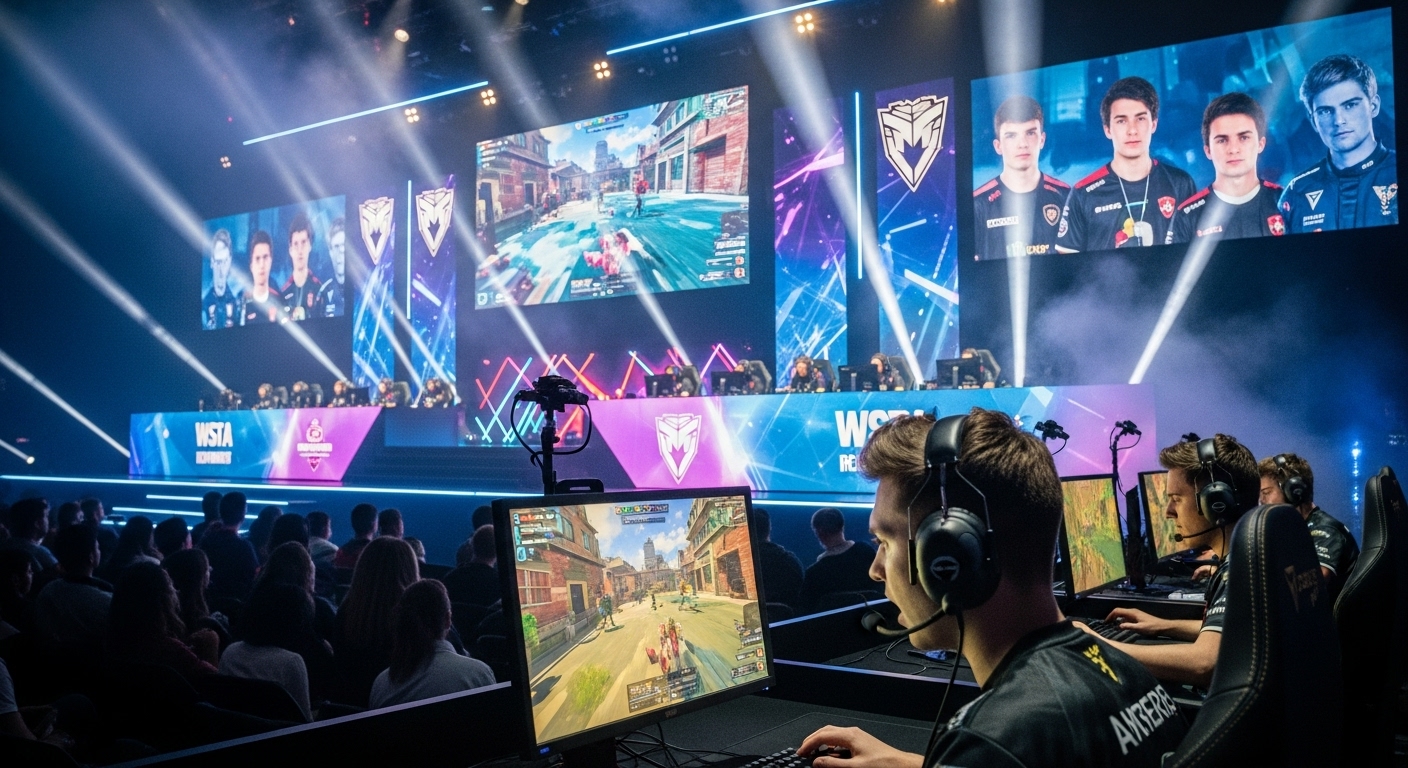
Today’s esports ecosystem mirrors traditional sports in many ways. There are professional teams, players, coaches, analysts, and organizations managing everything from training to marketing.
Teams like Fnatic, Cloud9, T1, and G2 Esports are internationally recognized brands. They compete across multiple games, have merchandise lines, and even attract celebrity investors. Players sign contracts, receive salaries, and live in team houses where they train together for hours each day.
Sponsors and investors now play a huge role. Major companies—from hardware brands like Intel and Razer to non-endemic names like Coca-Cola and Mercedes-Benz—have entered the scene. Sponsorship deals, media rights, and merchandise sales form the core of esports revenue, much like in traditional sports.
Franchise-based leagues, such as the Overwatch League and League of Legends Championship Series (LCS), have also brought structure and consistency. These leagues operate with regular seasons, playoffs, and global finals, offering fans year-round entertainment.
The Fans: The Heart of Esports
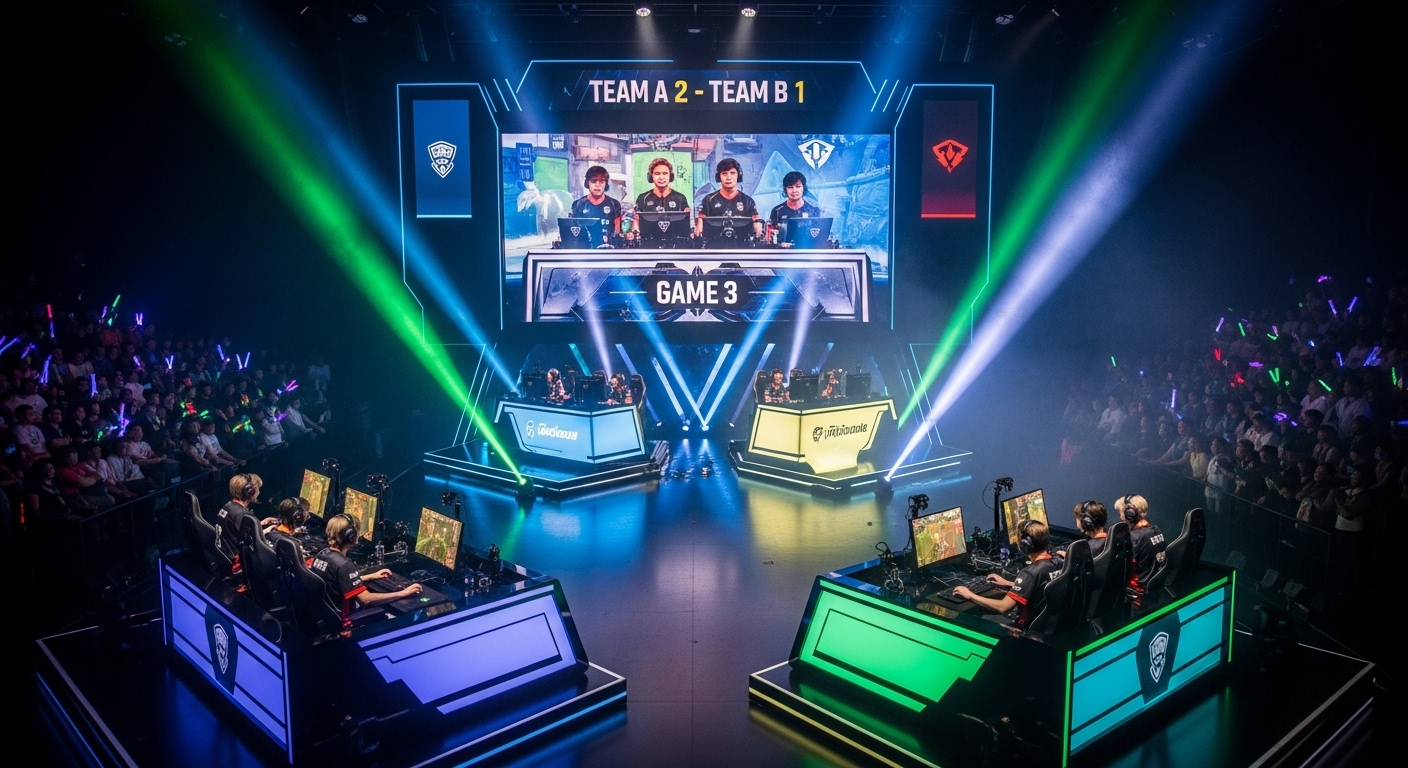
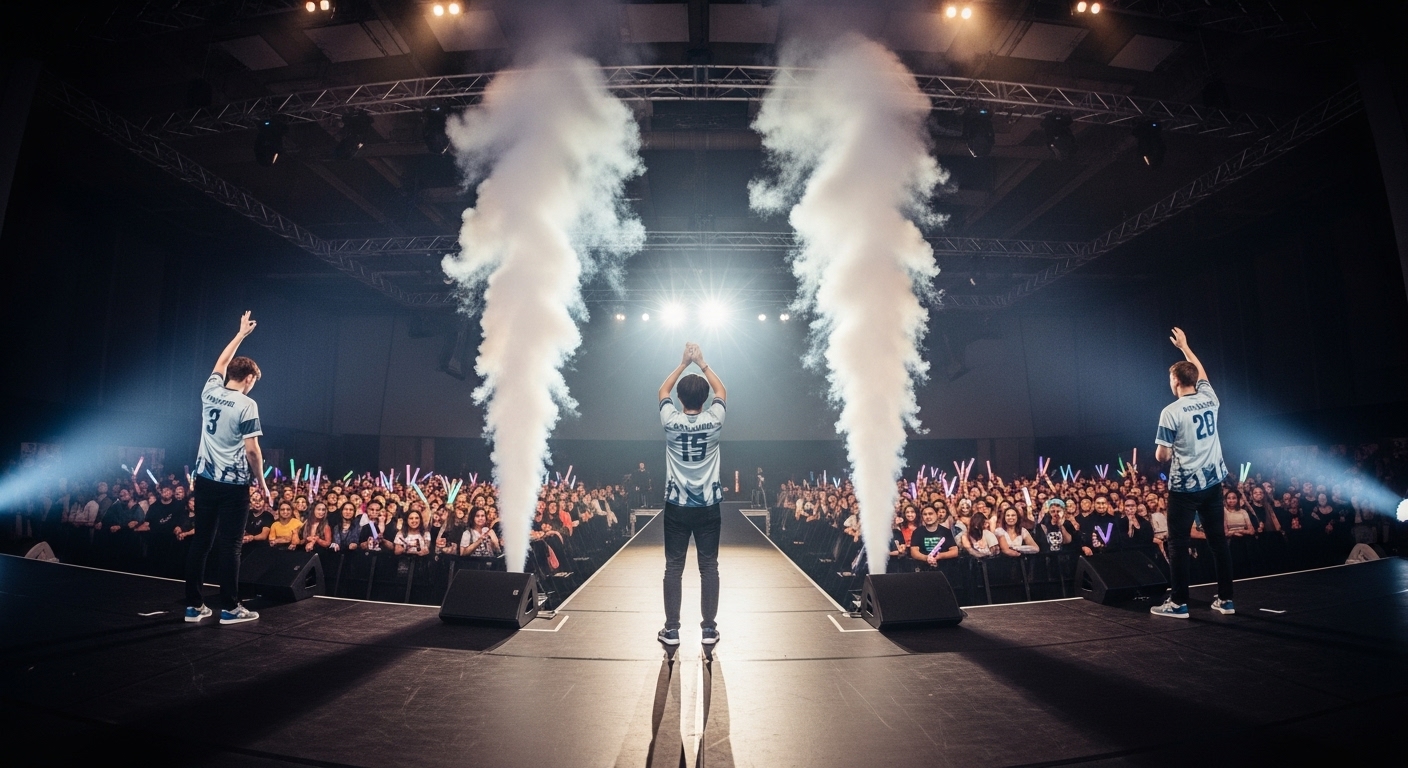
Esports wouldn’t exist without its fans. Millions tune in online to watch matches, share memes, and debate strategies. Events like The International for Dota 2, League of Legends World Championship, or CS:GO Major tournaments fill entire arenas. Fans travel across countries to cheer for their teams, waving banners, chanting names, and celebrating like at any major sporting event.
Unlike traditional sports, esports fans can directly interact with their heroes through social media and streaming platforms. A player can go from amateur to global superstar overnight thanks to a viral clip or a Twitch audience. This direct connection has made esports feel personal and community-driven.
The Culture of Esports: Beyond the Games
Esports has become more than competition—it’s a culture. It influences fashion, music, and lifestyle. Gaming jerseys are as recognizable as football kits, and collaborations with streetwear brands are common.
Music plays a major role too. League of Legends, for example, produces annual theme songs and even virtual bands that perform at championship events. These performances blend digital art, animation, and live music, creating an immersive show unlike anything in traditional sports.
Esports personalities have also crossed into mainstream entertainment. Players and streamers appear in commercials, documentaries, and talk shows. Gaming is no longer hidden in basements—it’s celebrated on global stages.
Esports Education and Career Paths
With esports now part of mainstream entertainment, it has created legitimate career opportunities. Universities around the world are offering scholarships for esports athletes. Courses in game design, broadcasting, and esports management are preparing the next generation for the industry.
There are careers beyond playing—production, event management, content creation, coaching, analytics, and marketing all play a part in the esports ecosystem. The demand for professionals who understand both gaming and business is higher than ever.
The Business Side: Money, Marketing, and Media
Esports has become a billion-dollar industry. Revenue comes from sponsorships, media rights, ticket sales, advertising, and merchandise. Prize pools continue to grow, but the biggest money often comes from branding and partnerships.
Media coverage has also evolved. Mainstream outlets now regularly cover esports events, while dedicated networks stream matches 24/7. Esports tournaments have drawn viewership numbers that rival the Super Bowl or the World Cup. For example, the 2023 League of Legends World Championship peaked at over 6 million concurrent viewers globally.
As streaming platforms grow, so does the potential for advertising and fan monetization. From virtual event tickets to exclusive content and NFT-style collectibles, esports organizations are experimenting with new ways to connect with fans.
Challenges Facing Esports
Despite its growth, esports isn’t without problems. The industry still faces challenges that need careful attention.
Player Burnout
Professional gamers train for long hours under immense pressure. Many retire before the age of 25 due to mental and physical fatigue. Balancing performance, health, and longevity is an ongoing issue.
Sustainability
While viewership is high, consistent profitability remains a challenge for some teams and organizers. The reliance on sponsorships means that economic downturns or brand withdrawals can hit hard.
Integrity and Regulation
As with any sport, issues like cheating, match-fixing, and performance-enhancing substances have emerged. Ensuring fair play and creating global standards is essential for maintaining credibility.
Representation and Inclusion
Women and marginalized groups are still underrepresented in competitive gaming. Toxic behavior and harassment remain persistent issues online. However, initiatives promoting diversity and inclusion are gaining momentum, aiming to make esports welcoming for everyone.
The Pandemic Effect: A Digital Boom
The COVID-19 pandemic shut down live sports, but esports adapted quickly. With everything moving online, tournaments continued with remote setups. Viewership skyrocketed as people sought entertainment at home. Traditional sports networks even began airing esports events to fill their schedules.
This period proved how resilient and adaptable esports can be. It also attracted a new wave of fans who might never have considered gaming as a spectator sport before.
The Future of Esports
Esports shows no signs of slowing down. New technologies like virtual reality, augmented reality, and cloud gaming will shape the next decade. Cross-platform play and mobile gaming are expanding the audience further, especially in regions like Southeast Asia, India, and Africa.
Big tech companies are investing heavily, and governments are starting to recognize esports as legitimate sports. Olympic committees have even begun exploring esports events, signaling just how mainstream the field has become.
We may soon see a future where esports athletes are celebrated alongside traditional sports icons, where global tournaments are as anticipated as the World Cup, and where gaming becomes the universal language of competition.
Conclusion
The journey of esports is a story of passion, innovation, and community. What began as small gatherings of gamers has become a worldwide spectacle watched by millions. It represents the power of technology to connect people, the creativity of digital culture, and the competitive spirit that drives us all.
As the lines between the physical and digital worlds blur, esports will continue to shape the way we play, watch, and interact. Whether you’re a player, a fan, or just an observer, one thing is clear—the world of esports is here to stay, and its next chapter is just beginning.