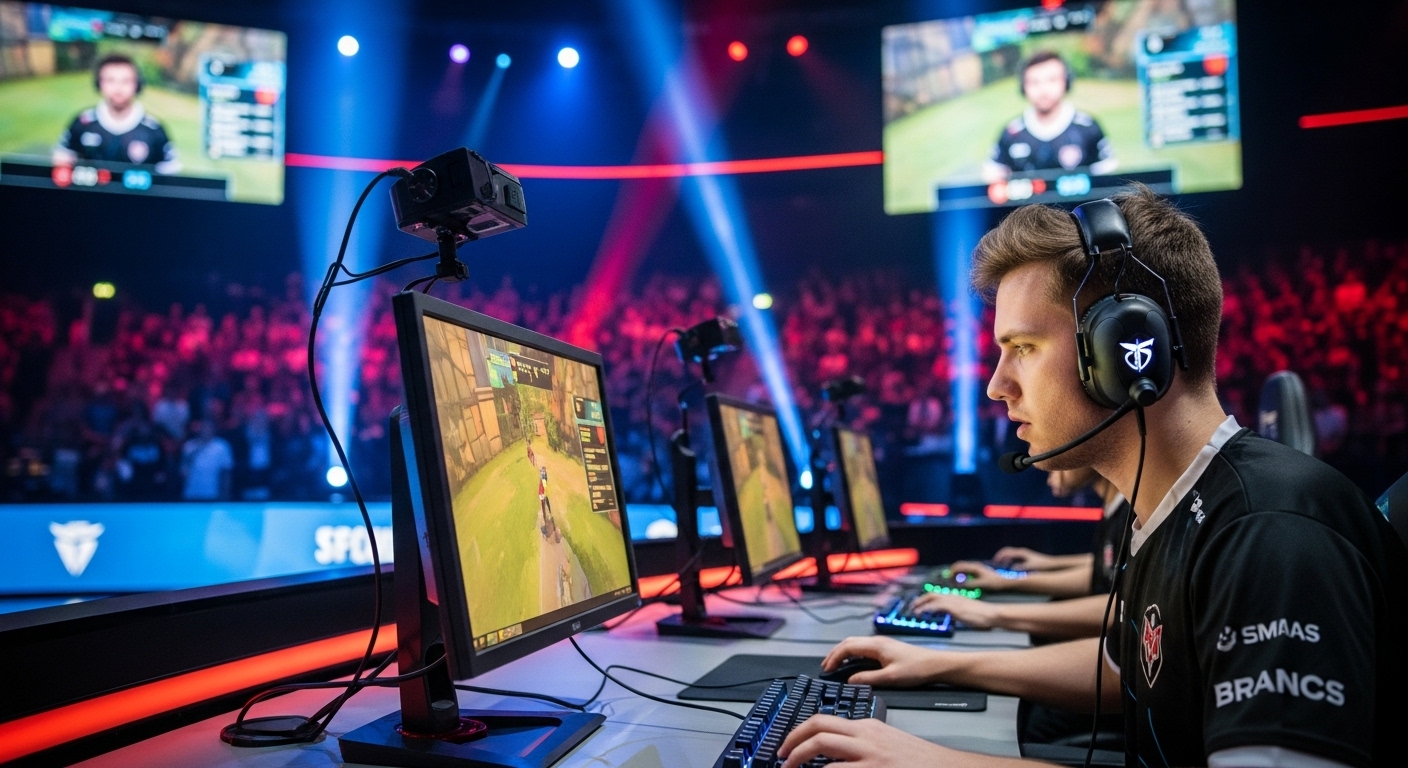
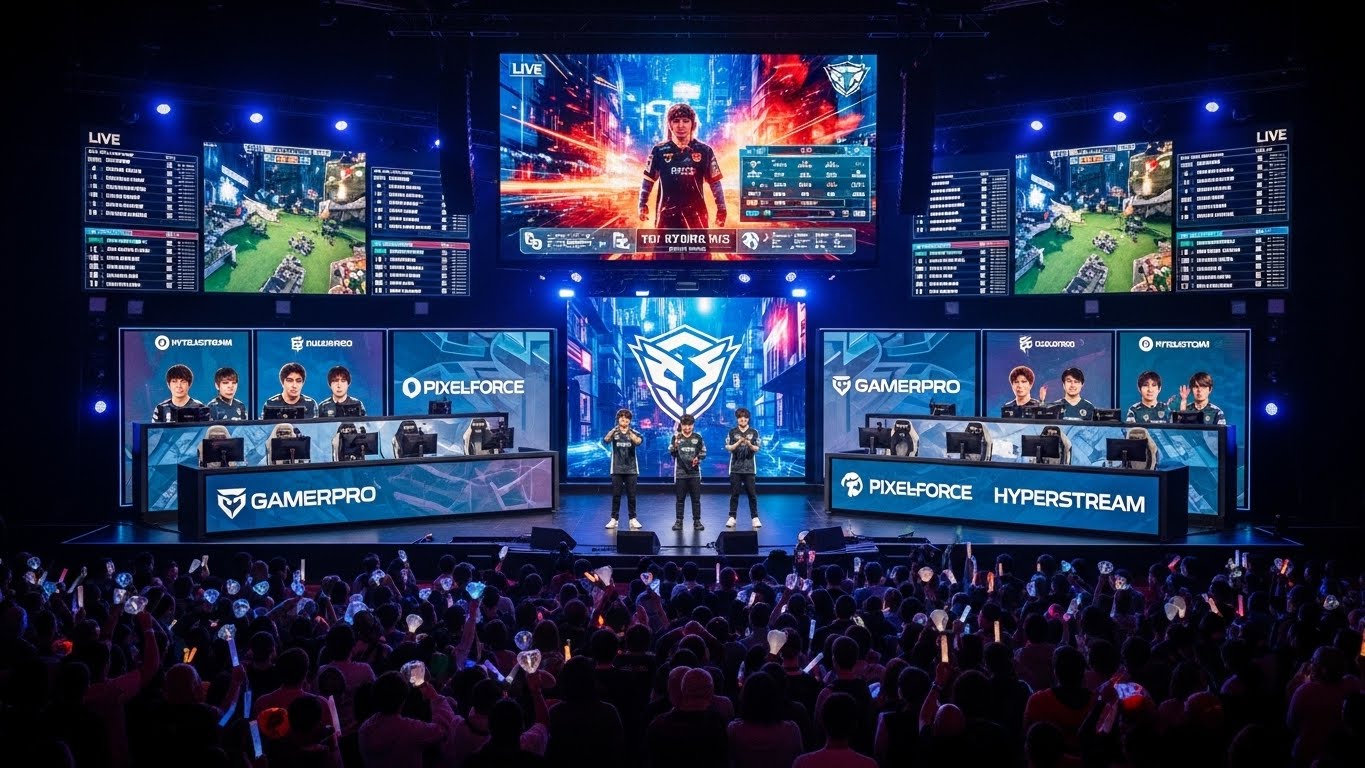
Esports has transformed from a niche hobby into one of the most exciting and fastest-growing entertainment industries in the world. What started as a few friends gathering to play video games has evolved into a billion-dollar ecosystem that rivals traditional sports in popularity, viewership, and cultural influence.
This blog dives deep into how Esports emerged, its growth through the decades, the players and organizations behind it, and what the future holds for competitive gaming.
The Humble Beginnings of Esports
When people think of Esports today, they imagine packed arenas, bright lights, and millions of online viewers. But the roots of this movement go back to the early days of video games.
In the 1970s, video games were still new. The first known video game competition happened in 1972 at Stanford University, where students competed in Spacewar! for a year’s subscription to Rolling Stone magazine. It might seem small by today’s standards, but it laid the foundation for organized gaming.
By the 1980s, arcade gaming was everywhere. Titles like Pac-Man and Donkey Kong created friendly rivalries among players. The idea of getting the highest score became a public obsession. Magazines started publishing leaderboards, and gaming competitions began popping up across the United States.
The introduction of the Nintendo Entertainment System in the late 1980s helped bring competitive gaming into people’s homes. Tournaments like the Nintendo World Championships in 1990 gave players the chance to prove their skills on a big stage.
The Internet Changes Everything
The 1990s brought the rise of personal computers and, most importantly, the internet. Suddenly, gamers didn’t have to meet in person to compete. They could play against anyone in the world.
Games like Quake, StarCraft, and Counter-Strike turned into early Esports titles, hosting tournaments with prize pools that began to attract serious attention. South Korea, in particular, played a massive role in Esports’ development. The country invested heavily in broadband internet, and gaming cafés known as “PC bangs” became a cultural phenomenon.
By the early 2000s, South Korea had professional gaming leagues with sponsors, TV coverage, and fan bases similar to sports teams. Players like Lim “BoxeR” Yo-hwan in StarCraft became national celebrities.
The Western world soon caught on. LAN tournaments for games like Halo, Call of Duty, and Warcraft III gained traction, while companies began experimenting with organized circuits and prize pools.
The Streaming Revolution
While Esports grew steadily in the 2000s, the true explosion came with the rise of live streaming. Platforms like Twitch and YouTube Gaming changed everything.
Before streaming, Esports struggled to reach a wide audience because events were hard to watch. With Twitch, anyone could tune in live from anywhere in the world, for free.
This accessibility opened the floodgates. Fans could not only watch tournaments but also follow their favorite players every day. Streamers built personal brands, teams gained global followings, and gaming became a legitimate form of entertainment on par with television or film.
Titles like League of Legends, Dota 2, and Counter-Strike: Global Offensive benefited the most from this shift. Their competitive structures and free-to-play models made them easy to join and easy to follow.
The League of Legends World Championship began filling arenas with tens of thousands of fans. Dota 2’s The International shattered records with its crowdfunded prize pools, which reached tens of millions of dollars.
Esports and the Mainstream Media
For years, traditional media outlets dismissed Esports as a passing trend. But as viewership numbers grew, that perception changed.
When a League of Legends final draws more viewers than the NBA Finals, it’s impossible to ignore. Brands like Coca-Cola, Mercedes-Benz, and Nike started sponsoring teams and tournaments.
Television networks began broadcasting Esports events, and major universities introduced Esports scholarships. Even the International Olympic Committee has started to explore ways to include Esports in future Olympic programs.
The narrative shifted from “gamers in basements” to “professional athletes with coaches, nutritionists, and sponsorship deals.” Esports players now have contracts, agents, and media obligations just like traditional sports stars.
The Players Behind the Screens
At the heart of every Esports competition are the players. These are individuals who dedicate countless hours to perfecting their craft.
Top-tier players often train eight to twelve hours a day. They study game mechanics, review strategies, and analyze opponents. The physical demand might not compare to football or basketball, but the mental endurance required is extraordinary.
Reaction time, focus, and teamwork are critical. In games like Valorant or Overwatch, a single mistake can mean defeat.
Many professional players start young, often in their teens. But their careers can also be short due to the intense competition and constant evolution of the games. As a result, many turn to coaching, streaming, or content creation after retirement.
The rise of women and nonbinary players has also been an important development. While Esports has historically been male-dominated, more women are competing at high levels, and organizations are creating more inclusive environments.
Esports Organizations and Franchising
Just like traditional sports, Esports is built around teams and organizations. Big names like T1, Fnatic, Cloud9, and Team Liquid have become global brands.
In the past, teams were more like small groups of players under a banner. Today, they operate as businesses, complete with management, marketing departments, training facilities, and sponsorship deals.
The introduction of franchising changed the landscape. Games like Overwatch League and League of Legends Championship Series (LCS) adopted models similar to the NFL or NBA. Teams buy permanent spots in leagues instead of qualifying every season.
This structure brought stability and long-term investment into the ecosystem. Franchising also opened doors for partnerships, merchandise, and better player conditions.
However, it’s not without challenges. Franchise fees can reach tens of millions of dollars, and not every organization can sustain those costs. Still, the move toward professionalization has made Esports more structured and sustainable.
The Economics of Esports
The financial side of Esports is as fascinating as the competition itself.
Revenue comes from several sources: sponsorships, media rights, advertising, merchandise, and ticket sales. Sponsorships make up the largest share, as brands want to reach the valuable 18–35-year-old demographic that Esports attracts.
Streaming platforms also play a huge role in monetization. Ad revenue, subscriptions, and donations contribute to both player and organization income.
Prize money varies across games, with Dota 2’s The International offering some of the largest payouts in history. However, most players earn through salaries and sponsorships rather than winnings.
The industry’s valuation has surpassed a billion dollars globally, and it continues to grow. Investors see Esports as the future of entertainment and are pouring money into new leagues, arenas, and tech innovations.
The Role of Technology
None of this would be possible without technology. From high-speed internet to powerful gaming PCs and consoles, tech advancement drives Esports forward.
Streaming tools have become more efficient, reducing lag and allowing smoother broadcasts. Cloud gaming is also on the rise, which could make Esports even more accessible by removing hardware barriers.
Virtual reality and augmented reality might soon bring new ways to experience competitive gaming. Imagine watching a match from the perspective of your favorite player or standing inside the virtual arena as the action unfolds.
Artificial intelligence is also being used to analyze gameplay, improve training, and even detect cheating.
The Esports Culture
Beyond competition, Esports is a culture. It’s built around passion, creativity, and community.
Fans engage in ways that traditional sports audiences rarely do. They don’t just watch—they participate. They create memes, fan art, and highlight videos. They follow players’ streams, interact in chat, and support their favorite teams like family.
Events like DreamHack and BlizzCon blend competition with conventions, concerts, and meetups. These gatherings celebrate gaming as a lifestyle, not just a sport.
Esports also bridges global cultures. A fan in Brazil can support a team in South Korea or chat with players in Europe. The shared language of gaming crosses borders and backgrounds.
Challenges Facing Esports
Despite its success, Esports faces real challenges.
One issue is burnout. Players often face intense pressure, long hours, and little rest. Mental health is a growing concern, and organizations are starting to prioritize player well-being.
Cheating and match-fixing are also risks. With so much money at stake, maintaining integrity is critical. Developers and tournament organizers invest heavily in anti-cheat systems and monitoring.
Another challenge is balancing developer control. Since games are owned by private companies, those companies hold significant power over the competitive scene. Changes to a game or its balance can directly impact entire Esports ecosystems.
There’s also the issue of representation. While the community is becoming more inclusive, women and marginalized groups still face barriers. Progress is being made, but there’s more work to do.
Esports in Education
One of the most interesting trends is how Esports is being integrated into education.
High schools and universities around the world now have Esports programs. Students can earn scholarships, compete in collegiate leagues, and even pursue degrees in game design, broadcasting, or Esports management.
These programs teach valuable skills beyond gaming—teamwork, strategy, communication, and leadership. They also open doors for careers in production, coaching, marketing, and technology.
Esports isn’t just about playing—it’s about building an ecosystem that mirrors real-world industries.
The Global Impact of Esports
Esports has become a truly global movement.
In Asia, countries like South Korea, China, and Japan have long been leaders in competitive gaming. Europe has strong scenes in games like Counter-Strike and FIFA, while North America dominates in Call of Duty and Valorant.
Emerging regions like South America, the Middle East, and Africa are also gaining traction, with growing player bases and investment.
This international reach makes Esports one of the few entertainment forms that unite people worldwide. Tournaments bring together fans who may not share a language but share the same passion.
The Future of Esports
Looking ahead, Esports shows no signs of slowing down.
As technology continues to improve, the experience will only get better. Virtual events will become more immersive, and global accessibility will increase.
We may also see Esports become part of mainstream education and even physical sports leagues. Hybrid events that mix traditional and digital sports are already being tested.
The line between player and spectator will blur further, with interactive viewing experiences and AI-driven personalization.
While no one can predict exactly what’s next, it’s clear that Esports is here to stay—and it’s shaping the future of entertainment, technology, and community.
Conclusion: More Than Just Games
At its core, Esports is about competition, connection, and creativity. It’s a space where anyone with skill, passion, and dedication can rise to the top—no matter where they come from.
From humble beginnings in college labs to filling global stadiums, Esports represents how far gaming culture has come. It’s not just a pastime anymore—it’s a movement, a career, and for millions, a way of life.
The world of Esports continues to grow, evolve, and inspire, reminding us that play isn’t just fun—it’s powerful.